How to Use Nattokinase in Cardiovascular Supplement Formulations
Formulating with nattokinase: activity specification, capsule and tablet processing, excipients, COA/TDS/SDS, pilot validation and export labelling for supplement manufacturers.
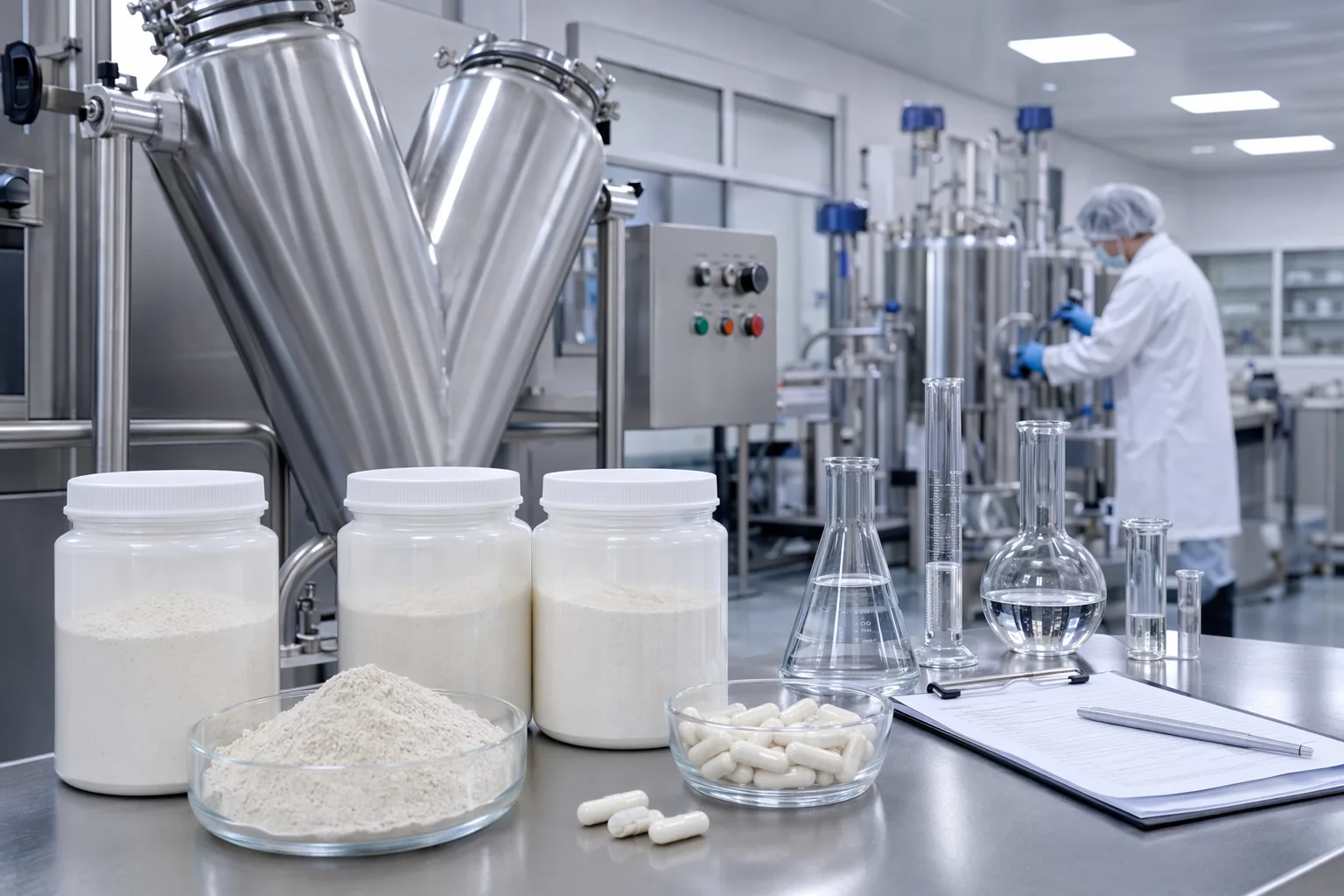
A practical guide for supplement brands, contract manufacturers and formulators specifying, processing and validating nattokinase in capsules, tablets, sachets and blends. To quote a formulation project, send the dosage form, target activity per serving, annual quantity and destination through the inquiry form.
Nattokinase as a Supplement Raw Material
Nattokinase is a fibrinolytic enzyme produced by controlled fermentation with Bacillus subtilis var. natto, then purified, dried and standardized to a declared activity. Commercial material is supplied as a powder, often on a carrier, with activity stated in fibrinolytic units (FU) per gram. Because carrier level, potency and assay method differ between suppliers, two powders with the same weight can deliver very different activity. Procurement should therefore compare activity per gram and the method behind it, not price per kilogram alone.
Ingredient type: fermented enzyme powder • Activity unit: FU/g, confirmed by the supplier's assay • Formats: capsules, tablets, sachets and blends • Main concern: activity retained through shelf life
Activity Specification and Input Calculation
Formulation starts with an activity target per serving, set by the brand together with its regulatory review, and the ingredient input is then back-calculated from the supplier's potency. This site's grade is standardized at 20,000–40,000 FU/g; the lot value on the COA, not the range, is the basis for the calculation. Overage should be justified by stability data rather than added routinely. Confirm whether activity is measured by a fibrin plate, chromogenic or supplier-specific validated method, and do not compare materials tested by different methods without bridging data. Ask whether vitamin K2 is present, reduced or controlled in the material, because it affects label and regulatory review.
Define the target per serving before choosing a grade • Calculate input from the lot's activity per gram • Use overage only where stability data support it • Require assay method details on the COA or TDS
Processing Capsules, Tablets and Sachets
Heat, moisture, acidic exposure and aggressive processing can all reduce nattokinase activity. Dry blending and direct encapsulation are the lowest-risk routes; wet granulation and high-temperature drying should only be used where the supplier has compatibility data and retained-activity tests confirm the result. The supplier's stated working range for this grade is pH 6.0–10.0 and 37°C–48°C; finished dry products still need validation in their actual matrix and storage conditions. For tablets, assess heat and pressure at the intended press speed. For capsules and sachets, blend uniformity, segregation, fill weight and moisture pick-up during packaging matter more than complex processing.
Preferred route: dry blending or direct encapsulation • Avoid unnecessary wet granulation and hot drying • Check pH exposure if coatings or liquid intermediates are used • Assay activity before and after compression
Excipient Compatibility and Delivery Format Choices
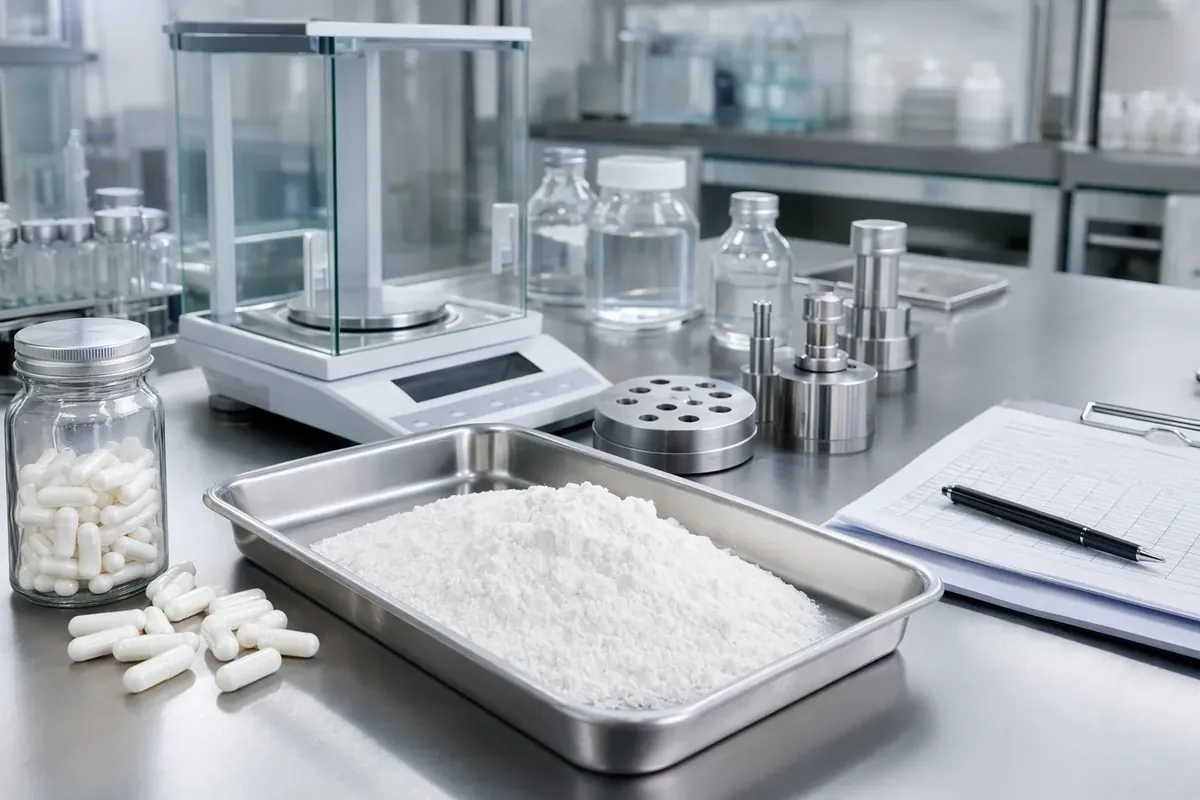
A nattokinase supplement can be formulated as a capsule, tablet, sachet, or combination cardiovascular blend, but each format changes the risk profile. Capsules are often the simplest route because they minimize heat and compression stress. Tablets can improve consumer convenience but require lubricant, disintegrant, and compression compatibility screening. Powder sachets need careful moisture protection and taste management, while gummies and beverages are usually challenging because water activity, heat, and pH can compromise enzyme activity. Excipients should be screened for protease compatibility; avoid strong oxidizers, highly acidic ingredients in direct contact, and mineral blends that may increase moisture uptake unless validated. If using enteric or delayed-release concepts, confirm that the coating process temperature and solvent system do not reduce activity. Finished format selection should balance label claim, stability, manufacturing yield, consumer experience, and cost-in-use.
Lowest technical complexity: hard capsules • Higher validation burden: compressed tablets • High-risk formats: gummies, liquids, and acidic powders • Screen excipients for moisture, pH, and enzyme compatibility
Quality Control, COA, TDS, and Release Testing
B2B buyers should require a complete documentation package before approving nattokinase for production. The certificate of analysis should identify lot number, activity in FU/g, assay method, microbiological results, heavy metals where applicable, residual solvent or process contaminant status if relevant, and physical parameters such as appearance, odor, moisture, and particle size. The technical data sheet should describe source organism, carrier or excipient system, recommended storage, solubility or dispersibility, pH and temperature guidance, allergen information, and handling precautions. The safety data sheet supports warehouse and manufacturing risk assessment. Finished-product QC should include identity, fill weight or tablet weight, activity at release, microbial limits, and stability pull points. For imported or multi-site supply chains, align specifications across supplier, contract manufacturer, and brand owner to prevent release disputes.
Request COA, TDS, and SDS before pilot work • Confirm activity assay method and acceptance criteria • Test retained FU after manufacturing • Include stability pull points under intended packaging
Pilot Validation, Stability, and Cost-in-Use
Pilot validation converts supplier data into manufacturing confidence. Run small-scale batches using the intended equipment, blending time, compression force, encapsulation speed, and packaging configuration. Test nattokinase activity before blending, after blending, after unit-dose manufacturing, and after initial stability exposure. Accelerated studies can screen risk, but real-time stability under commercial packaging is needed for shelf-life support. Cost-in-use should include potency, required input weight, overage, yield loss, packaging needs, QC testing, minimum order quantity, freight, and rejected-batch risk. A lower-priced material may cost more if activity is lower, variability is higher, or extra overage is needed. Supplier qualification should cover fermentation control, lot traceability, change notification, contaminant monitoring, documentation responsiveness, and ability to support regulatory questionnaires for target markets.
Validate with commercial-intent equipment and packaging • Measure activity loss at each manufacturing step • Compare suppliers by cost per delivered FU • Include documentation quality in supplier scoring
Plan a second source early, but validate it independently: assay methods and carriers differ between suppliers.
Claims, Safety Review, and Export Labelling
Nattokinase is used in cardiovascular supplement concepts, but permissible claims, warnings and evidence requirements differ by country and sales channel. Brands exporting the same formula to several markets (for example Australia, the EU and the US) should have label wording, claims and dosage rationale reviewed for each destination by a qualified regulatory adviser. Safety review matters because nattokinase may be inappropriate for some users, including those taking anticoagulant or antiplatelet drugs, those with bleeding disorders, or those preparing for surgery. For B2B formulation, the goal is a stable, accurately assayed product with conservative, substantiated positioning.
Do not turn consumer search language into disease claims • Review anticoagulant-related warnings with qualified experts • Keep a substantiation file per market
Technical Buying Checklist
Dosage form and fill weight or tablet weight • Target activity per serving and the lot activity it is calculated from • Processing route (direct blend, dry granulation, compression, coating) • Packaging and desiccant plan • Stability conditions and pull points • Destination markets for label review • Documents needed for release: COA, TDS, SDS
Nattokinase for Research & Industry
Need Nattokinase for your lab or production process?
ISO 9001 certified · Food-grade & research-grade · Ships to 80+ countries
Frequently Asked Questions
What is nattokinase in supplement formulation?
Nattokinase is a fermented proteolytic enzyme ingredient used in cardiovascular supplement concepts. In industrial formulation, it is specified by fibrinolytic activity, usually FU/g, rather than powder weight alone. Buyers should verify source, carrier, assay method, microbiological quality, heavy metals where relevant, and stability behavior in the intended dosage form before commercial approval.
How should a formulator compare nattokinase suppliers?
Compare suppliers by delivered activity, documentation quality, lot consistency, stability data, and cost-in-use. Request COA, TDS, SDS, assay method details, storage guidance, change-control policy, and pilot sample availability. A supplier with a higher price per kilogram may still be more economical if potency, retained activity, technical support, and release predictability are stronger.
What processing conditions help protect nattokinase activity?
Use dry, low-heat processing whenever possible. Keep routine handling below 30 °C, limit time above 40 °C unless validated, avoid wet granulation without compatibility data, and protect the blend from high humidity. For tablets, check FU activity before and after compression. For capsules, monitor blend uniformity, fill weight, and moisture ingress during packaging.
Can nattokinase be compressed into tablets?
Yes, but compression heat and force can reduce activity. Run trials at the intended press speed and hardness, assay activity before and after compression, and screen lubricants and disintegrants for compatibility. Capsules remain the lower-risk format where tablets are not required.
Are nattokinase dangers relevant to B2B product development?
Yes. Although B2B teams are not providing medical advice, safety review affects label language, market access, and complaint risk. Nattokinase may require cautions for people using anticoagulant or antiplatelet drugs, those with bleeding disorders, or those preparing for surgery. Any warning statements and claims should be reviewed by qualified regulatory and medical professionals for each target market.
Does onset of effect belong in a formulation specification?
No. Formulators should not promise a specific onset of effect without authorized substantiation. The measurable manufacturing question is whether the finished product delivers the intended enzyme activity at release and throughout shelf life, shown by validated activity assays and stability testing.
Related: Best Nattokinase Benefits in Industrial & Supplement Processing
Turn This Guide Into a Supplier Brief Request nattokinase specifications, samples, and formulation support for your next cardiovascular supplement project. See our application page for Best Nattokinase Benefits in Industrial & Supplement Processing at /applications/nattokinase-industrial-benefits/ for specs, MOQ, and a free 50 g sample.
Contact Us to Contributehello@mail.enzymelive.com