Nattokinase Dangers in Supplement Manufacturing
Manufacturing and compliance risks with nattokinase: activity loss, process damage, COA/TDS/SDS review, supplier comparison and label review for supplement makers.
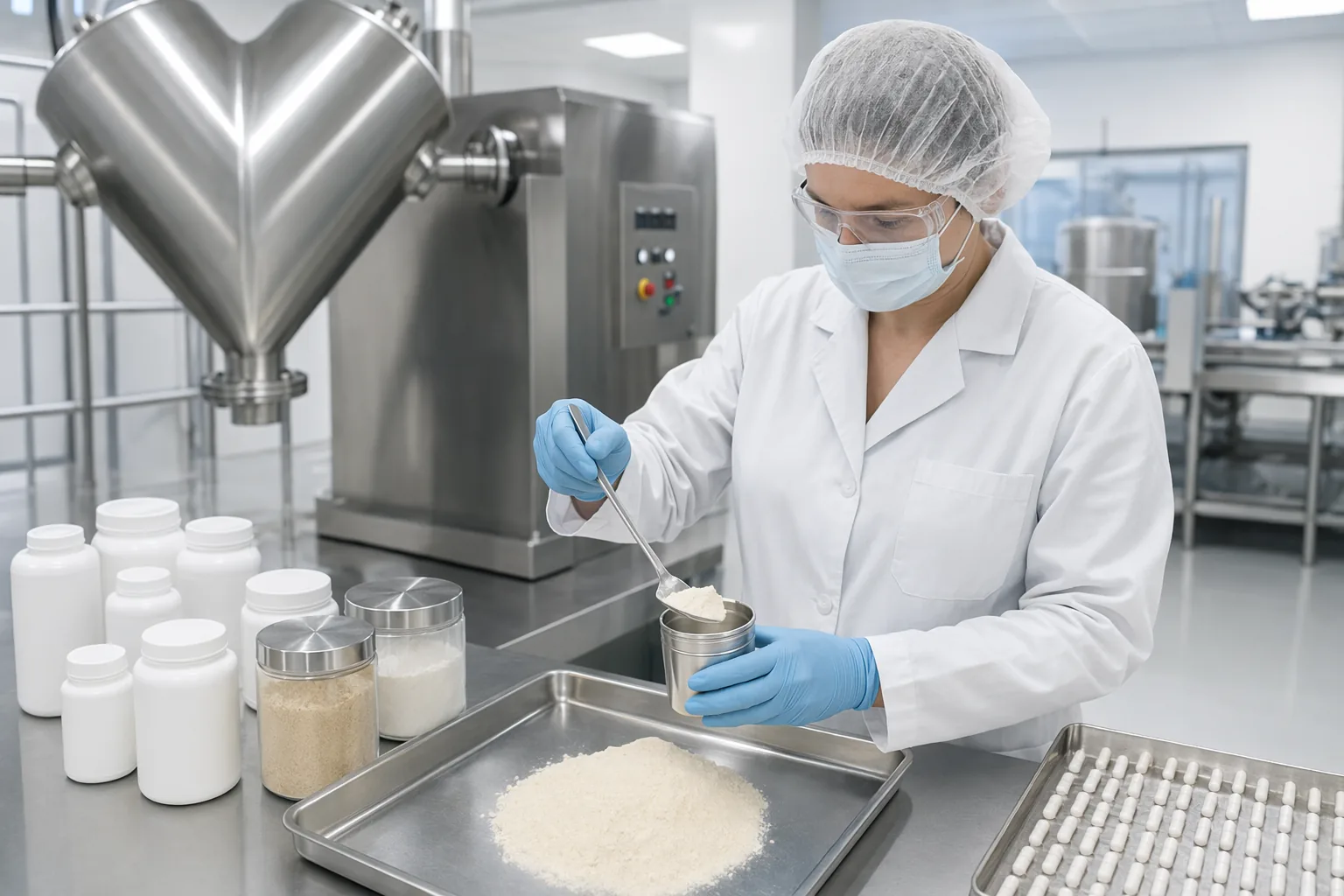
A risk-control guide for supplement manufacturers, contract manufacturers and ingredient buyers: where nattokinase loses activity, which documents to check and how to compare suppliers before approval. To quote with documents, send the activity grade, quantity, pack size and destination, and list the documents your QA team needs.
Why Nattokinase Dangers Are Manufacturing Risks
For B2B buyers, nattokinase dangers are manufacturing and compliance risks, not consumer medical advice. Nattokinase is a fibrinolytic enzyme produced from fermented soy with Bacillus subtilis var. natto and used in cardiovascular supplements. Its commercial value depends on activity, stability, process exposure and documentation. A low-cost powder becomes expensive if activity drops during granulation, if allergen or soy-origin declarations are unclear, or if label claims cannot be supported by QC data.
Treat potency, stability and documentation as the primary risk controls. • Do not qualify suppliers on price per kilogram alone. • Confirm activity is declared in FU/g and supported by batch testing.
Potency Risk: Activity Units and Assay Methods
Formulation should be anchored on activity, not raw powder weight. Materials are standardized by fibrinolytic units, and potency varies by supplier and grade; this site's grade is declared at 20,000–40,000 FU/g. Ask for several recent batch COAs to see lot-to-lot variation, the analytical method and sample preparation, the unit definition and the carrier composition. Cost-in-use should then be calculated per delivered activity unit in the capsule, tablet or sachet, including assay variability, processing loss, rejected batches and the shelf life remaining at receipt.
Use activity per serving as the formulation anchor. • Model overage only after pilot and stability data. • Compare suppliers by cost per verified activity unit, not powder price.
Process Risk: Heat, Moisture, pH and Compression
Nattokinase is more compatible with neutral to mildly alkaline systems than with strongly acidic ones, and wet heat is more damaging than short dry handling. The supplier's stated working range for this grade is pH 6.0–10.0 and 37°C–48°C; anything outside it, and any long aqueous hold, high-temperature drying or steam treatment, needs retained-activity data before production. For capsules, low-moisture blending and controlled humidity are usually preferred. For tablets, check compression force, lubricant level and dwell time. If enteric protection or delayed release is wanted, validate the coating process and dissolution profile rather than assuming protection.
Screen the matrix pH early. • Minimize wet heat and long hot exposure. • Validate retained activity after blending, compression, coating and packaging.
QC Checks That Reduce Commercial Risk
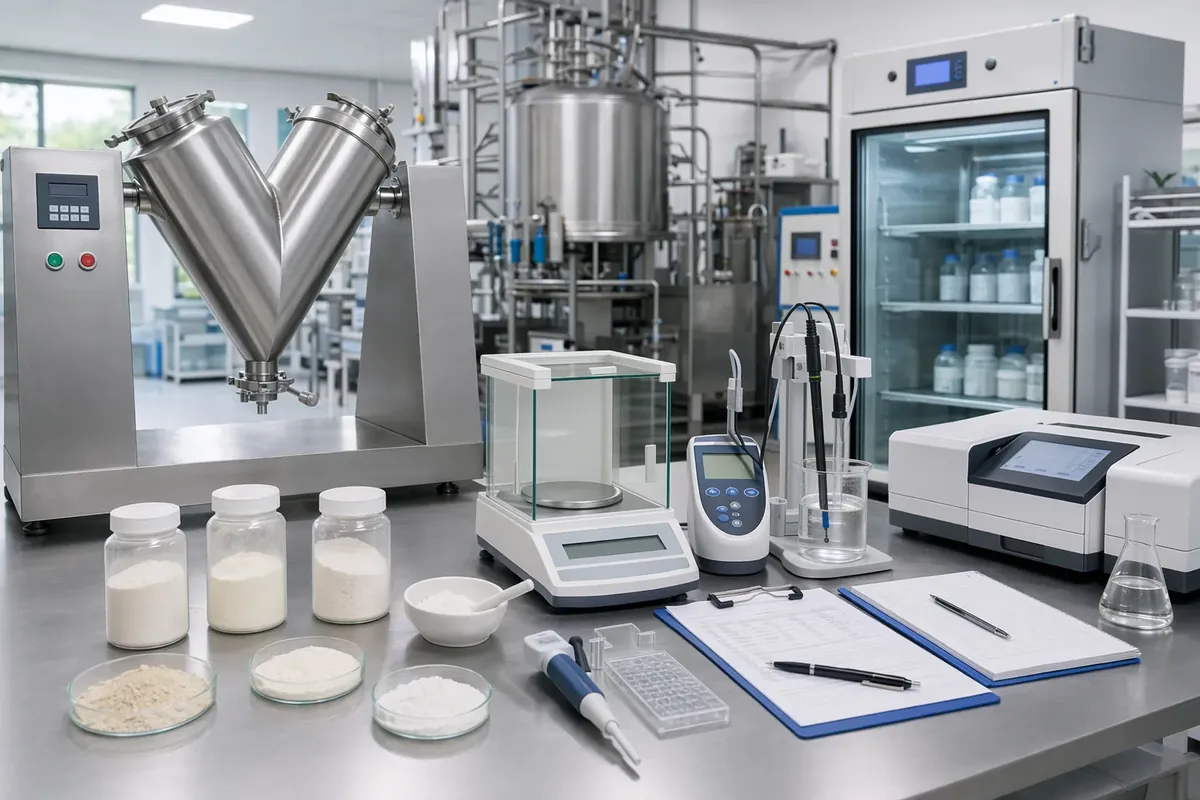
A robust nattokinase QC plan should include identity, activity, purity, microbiology, moisture, heavy metals, residual solvents if relevant, and allergen or soy-origin documentation. The COA should match the purchase specification and include batch number, test methods, activity result, limits, and date of manufacture or retest. The TDS should describe enzyme source, carrier or excipient system, solubility, recommended storage, pH and temperature guidance, and handling precautions. The SDS should be reviewed for occupational exposure controls because enzyme powders may irritate or sensitize workers when inhaled. Finished goods should be checked for retained FU activity after pilot production and accelerated and real-time stability. Manufacturers should avoid unsupported organ-specific claims and keep product language aligned with approved market rules.
Require COA, TDS, and SDS before purchase approval. • Test retained activity in the finished dosage form. • Include moisture and microbiology in release criteria. • Review label language separately from ingredient performance.

Supplier Qualification and Pilot Validation
Supplier qualification should verify manufacturing consistency, traceability, change-control practices, analytical capability, and responsiveness to technical questions. Ask for multiple batch COAs to assess activity variation, not only a single attractive specification sheet. Confirm whether the supplier can explain the assay method, sample preparation, unit definition, carrier composition, storage conditions, and expected retest period. Pilot validation should reproduce intended commercial steps: sieving, blending, encapsulation or tableting, coating if used, bottle or blister packaging, and stability placement. Measure nattokinase activity before and after each critical step to identify where losses occur. A supplier that supports troubleshooting may reduce total cost even if the quoted kilogram price is higher. For global programs, evaluate regulatory fit, allergen declarations, documentation language, and logistics risk before committing to scale-up.
Review at least three recent batch COAs where possible. • Run a pilot using the actual formula and packaging. • Track activity loss at each critical process step. • Include logistics, lead time, and technical support in qualification.
Comparing Supplier Offers on the Same Basis
Offers are only comparable when they describe the same thing: activity grade and assay method, carrier, pack size, documents supplied with each lot, change-notification policy and shelf life remaining at delivery. A cheaper low-activity preparation can raise fill weight, complicate blend uniformity and add testing cost, while a more consistent grade can lower excipient load. For products sold in several markets, check that the supplier can provide the documentation each destination requires without prohibited claims.
Request quotes against one written specification. • Compare delivered activity cost, documents and lead time together. • Validate each source independently before approval.
Customer Feedback Versus Release Data
Customer reviews and complaint records are useful signals: they can point to capsule defects, taste or odour issues, or packaging moisture problems. They cannot replace release testing. Each complaint should be traced to the finished-product lot and from there to the ingredient lot and its COA, so that activity, moisture and microbiology results can confirm or rule out a quality cause. Reviews say nothing about assay results and must not be used to support label claims.
Link complaints to ingredient lots. • Re-test retained samples when a pattern appears. • Keep claims tied to the substantiation file, not to reviews.
Label and Safety Review
Consumer safety questions belong in label and regulatory review. Nattokinase may require cautions for people using anticoagulant or antiplatelet drugs, those with bleeding disorders, or those preparing for surgery. Warning statements, claims and any onset-of-effect wording should be reviewed by qualified regulatory and medical professionals for each target market, and adverse-event monitoring should be part of the brand's quality system.
Technical Buying Checklist
Recent batch COAs from several lots • Assay method, unit definition and acceptance range • Carrier and allergen / soy-origin statement • TDS storage and handling guidance • SDS for warehouse and worker protection • Change-control and notification policy • Retest period and shelf life remaining at delivery • Pilot batch plan on the intended equipment
Nattokinase for Research & Industry
Need Nattokinase for your lab or production process?
ISO 9001 certified · Food-grade & research-grade · Ships to 80+ countries
Frequently Asked Questions
What are the main nattokinase dangers for supplement manufacturers?
The main B2B risks are potency loss, inconsistent FU activity, heat or moisture damage, unclear soy or allergen status, weak documentation, and unsupported label language. These are controlled through supplier qualification, COA review, incoming QC, pilot validation, and finished-product stability testing. Consumer safety warnings should be handled through regulatory and medical review, not inferred from enzyme processing data.
How should buyers specify nattokinase enzyme activity?
Specify nattokinase by fibrinolytic activity, commonly FU/g, with a defined test method and release limit. Milligrams alone do not describe enzyme performance because two powders can have different activity levels. Ask suppliers for recent batch COAs, the analytical method, retest period, storage conditions, and expected activity variation so purchasing can compare cost per delivered activity unit.
What process conditions are safest for nattokinase supplements?
Low-moisture processing within the supplier's stated working range (pH 6.0–10.0 and 37°C–48°C for this grade), with limited heat exposure. Wet processing, hot drying, compression and coating steps should be validated by testing activity before and after each step rather than assuming the enzyme survives unchanged.
Can consumer search trends or reviews support label claims?
No. Search demand and reviews show market interest, but they do not support regulatory claims. Manufacturers should separate consumer education from approved claims and rely on regulatory review, substantiation files and market-specific compliance checks.
What documents should be requested before purchase approval?
Before purchase approval, request the COA, TDS, SDS, allergen statement, origin statement, activity method, storage guidance, and change-control policy. For larger programs, request multiple batch COAs and pilot-scale technical support. The best supplier is not always the cheapest per kilogram; it is the one that delivers consistent verified activity, documentation, and process support.
How should buyers compare nattokinase offers from different suppliers?
Compare offers by cost per verified activity unit, not only by kilogram price. Include assay strength, carrier content, expected overage, activity loss during processing, freight, testing, shelf life and documentation quality, and pilot-validate each source because assay methods and carriers differ.
Related: Best Nattokinase Benefits in Industrial & Supplement Processing
Turn This Guide Into a Supplier Brief Need a qualified nattokinase enzyme for supplement manufacturing? Request COA, TDS, SDS, and pilot-scale support from EnzymeLive. See our application page for Best Nattokinase Benefits in Industrial & Supplement Processing at /applications/nattokinase-industrial-benefits/ for specs, MOQ, and a free 50 g sample.
Contact Us to Contributehello@mail.enzymelive.com